

 See My Latest Article on HelloNation
Modern tile flooring is moving toward warmer colors, natural textures, larger formats, and surfaces that are easier to maintain. For homes in Greeley, CO, the most useful choices are not always the most dramatic ones. Dry conditions, seasonal temperature changes, tracked-in grit, and the needs of individual rooms all affect whether a tile trend works well in daily life.
Which tile styles are becoming more popular in modern homes?
The strongest design direction is a shift away from cold, highly polished surfaces and toward tile that feels more natural and residential. Homeowners are showing greater interest in materials that resemble wood, stone, clay, or handmade ceramics while still offering the durability of tile.
Common directions include:
- Warm beige, sand, taupe, muted brown, and soft gray tones
- Wood-look porcelain in long plank shapes
- Large-format tile with fewer visible grout joints
- Stone-look surfaces with gentle veining rather than sharp contrast
- Matte or lightly textured finishes
- Handmade or handmade-inspired wall tile with slight variation
- Terrazzo-style patterns using restrained color combinations
These styles work with both contemporary and traditional interiors. They also tend to age more gracefully than highly specific colors or bold patterns that may dominate a room.
Are large-format tiles a good choice for local homes?
Large-format tile can make a room appear more open because fewer grout lines interrupt the floor. Common floor sizes include 12-by-24-inch and larger rectangular formats, while oversized slabs are used selectively on walls and other surfaces.
The appearance can be especially effective in open kitchens, great rooms, entry areas, and primary bathrooms. However, larger tile is not automatically easier to install or maintain. The subfloor must be sufficiently flat, and the layout needs careful planning around cabinets, doorways, floor vents, and transitions.
Large tile can be less forgiving over uneven surfaces. In older homes or rooms with movement, a smaller format may better accommodate minor changes in the substrate. The choice should be based on the condition of the floor as well as the desired appearance.
A related trend is the use of large rectangular tile in a running-bond pattern. This creates visual movement without relying on a complicated design. Offset patterns should be planned carefully because some long tiles can show uneven transitions if the installation surface is not flat.
Why is porcelain tile often chosen for high-use areas?
Porcelain remains a popular material because it is dense, durable, and available in many visual styles. It can imitate wood, limestone, concrete, slate, and other materials without requiring the same level of sealing or specialized care as some natural products.
For busy household areas, useful characteristics include:
- Low water absorption
- Resistance to scratches and surface wear
- Compatibility with radiant floor heating systems when properly installed
- Availability in slip-resistant textures
- Easy routine cleaning
Porcelain is not indestructible. Heavy impacts can chip an edge, and poorly prepared subfloors can contribute to cracking. Dark, highly textured surfaces may also show dust or residue more readily than a softly varied matte finish.
In kitchens and entries, a moderate amount of visual variation can help disguise everyday grit. Very uniform dark tile may require more frequent sweeping to maintain a clean appearance.
Is wood-look tile still a practical design trend?
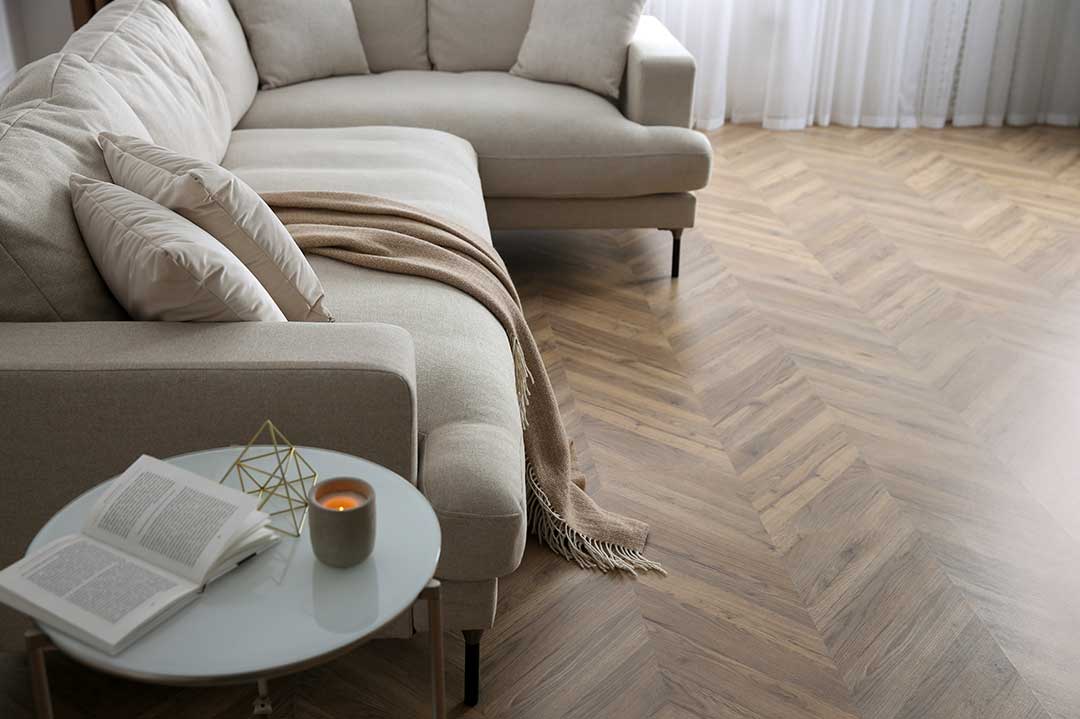
Wood-look tile continues to appeal to residents who want the visual warmth of wood in areas exposed to moisture, pets, dirt, or frequent cleaning. It is commonly used in kitchens, laundry rooms, bathrooms, mudrooms, and connected living spaces.
The most convincing versions usually include varied plank tones, subtle grain, and a low-sheen surface. Installing the planks with staggered joints can create a natural appearance, although excessive offsetting may highlight bowing in long pieces. A balanced layout and consistent grout color generally produce a more believable result.
Wood-look tile feels cooler and harder underfoot than actual wood. Area rugs and carefully selected furnishings can soften the room, but tile should not be chosen with the expectation that it will feel identical to hardwood.
What tile trends work well in bathrooms?
Bathrooms are seeing more coordinated tile schemes rather than a single tile used everywhere. A floor might use a small-format matte tile for traction, while the walls use a larger tile in a related color. Shower niches, borders, or limited accent areas can add contrast without making the room visually busy.
Current bathroom directions include:
- Soft stone looks in warm neutral tones
- Small hexagons and other geometric mosaics
- Vertical wall tile layouts
- Ribbed or fluted tile used as a focused accent
- Shower floors with smaller pieces and more grout joints
- Continuous color families between floor and wall surfaces
Small-format tile is often practical on shower floors because the additional grout joints help follow sloped surfaces. The grout itself still requires regular cleaning, and grout color should be selected with realistic maintenance expectations.
Glossy wall tile can brighten a bathroom, but it is generally less suitable for walking surfaces because smooth finishes may become slippery when wet.
Are bold patterns replacing neutral tile?
Bold patterns are being used, but usually in controlled areas rather than across every floor. Geometric cement-look designs, decorative mosaics, and contrasting borders can add personality to an entry, powder room, backsplash, or fireplace surround.
For larger spaces, a restrained pattern is often easier to live with. Another approach is to use a patterned tile in a small zone and keep surrounding surfaces simple. This allows the feature to remain visible without competing with cabinets, furniture, artwork, or natural light.
Patterned tile also deserves attention at transitions. A design that looks appealing in a sample may feel crowded if it must be cut into narrow strips around a room perimeter. Layout drawings or dry placement can reveal these issues before installation.
How should climate and household habits influence tile selection?
Greeley’s dry conditions can contribute to airborne dust and tracked-in grit, while winter weather can bring moisture, deicing residue, and temperature-related movement near exterior entries. Tile flooring performs well in these conditions when the surface, grout, and installation system are matched to the room.
Entry areas benefit from tile with enough texture to provide traction without being so rough that it traps dirt. A nearby mat can reduce the amount of grit carried across the floor. In kitchens and living areas, softly varied colors often hide minor dust better than completely solid surfaces.
Homes with radiant heating may use tile effectively because tile transfers and holds heat efficiently. The heating system, underlayment, movement joints, and tile installation must be compatible. Temperature changes should be managed gradually rather than by rapidly raising the floor to an extreme setting.
Which trends are likely to remain useful?
The most durable design choices are usually warm neutral colors, matte finishes, natural-looking variation, and tile sizes that suit the room. These characteristics can support changing furniture and paint colors without requiring a full flooring replacement.
Trends that deserve more caution include extremely slippery polished floors, very delicate surfaces in high-traffic areas, excessive grout contrast, and large tile installed over an uneven substrate. A fashionable appearance is only successful if the floor remains comfortable, safe, and manageable after normal household use.
For modern homes, tile selection works best as a balance between appearance and performance. The strongest design is not necessarily the newest pattern; it is the one that fits the room’s moisture exposure, traffic, cleaning routine, lighting, and long-term maintenance needs.